
Eco-Friendly Indian Weddings: How to Plan a Celebration That's Green & Gorgeous
Related reading: Indian Wedding Mood Boards: How to Create Your Wedding Style Step by Step
Why Sustainability Is the New Luxury
An eco-friendly Indian wedding is no longer a niche request — it's one of the fastest-growing ways couples are choosing to celebrate. There's something innately lovely about honouring love, but how we celebrate now matters as much as what we celebrate. Big displays, throwaway blooms, and carbon-intensive travel all carry a cost, and gradually, the very sentimentality that drives extravagant weddings starts to strain the world we love.
But the tide is turning. As excess fades from favour, sustainability is becoming the mark of thoughtful, refined celebration. Couples planning a green wedding in India are redefining the norms — choosing ceremonies that express devotion to each other and regard for the earth in equal measure.
The payoff? Timeless celebrations infused with charm and conscience: an open-air ceremony, seasonal flowers from the local town, a shared meal sourced from nearby farms, and a guest list of the people who matter most. Engaging. Intimate. Respectful. This is not a passing trend; it's a shift in how modern Indian weddings are planned — and, at Cosmical Event Planners, one we help couples across Rajasthan build into their destination wedding from day one.
Green Decor Ideas That Don't Cost the Earth
Style doesn't have to come at the planet's expense. Some of the most beautiful, Instagram-ready decor ideas are also the most sustainable wedding decor choices available. Going green isn't about compromising on beauty — it's about finding beauty in simplicity, nature, and intention.
1. Upcycled and Repurposed Elements
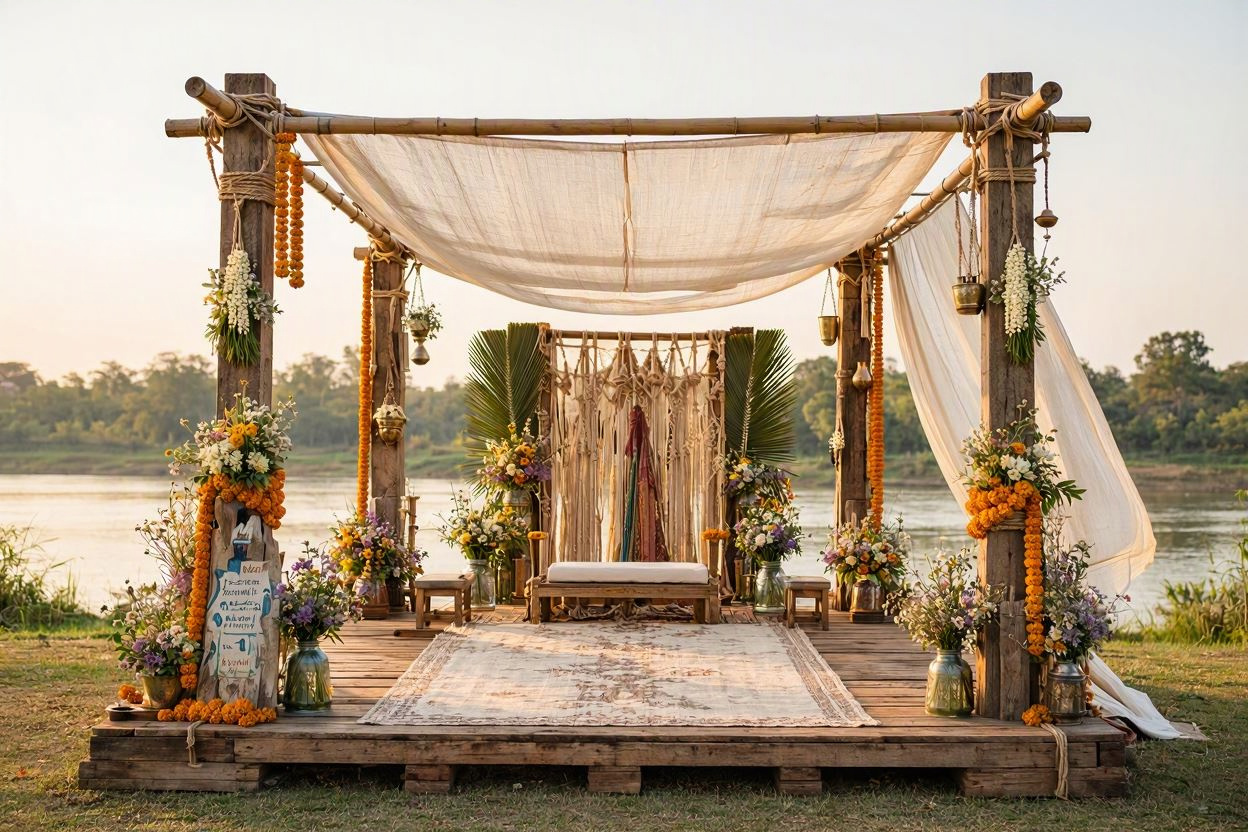
Someone else's discard can be your dream decor. Upcycled and reused elements bring a personal touch to your wedding aesthetic: mandaps crafted from recycled wood, antique brass lamps, repainted window panes as seating charts, or repurposed trunks used as cocktail tables.
You can also repurpose items from home or borrow heirlooms from family — copper pots, hand-woven rugs, or vintage sarees repurposed as drapes. These pieces limit waste and narrate your story through deeply personal objects.
2. Fresh Florals Over Foam
Floral foam, while widely used, is a biodegradable pollutant. Substitute it with floral frogs, mesh, or chicken wire as your arrangement base. Go further by using locally cultivated, seasonal flowers — marigolds, mogras, rajnigandhas, and roses bring festive energy without the environmental cost of imported blooms. After the celebration, compost the flowers or donate them for paper-flower or incense making.
3. Reusable Props and Signage
Why reprint when you can recycle and personalise? Wooden welcome boards, fabric bunting, chalkboard menus, and LED name cutouts are investments that serve several events. Try hand-painted boards, directional signs, or story timelines that can be gifted or reused at anniversaries.
Bonus tip: build multi-use decor — a flower-bedecked swing that doubles as a photo booth, or a rangoli stand that gets repainted for each function.
Zero-Waste Wedding Catering That Tastes as Good as It Feels
Catering is one of the biggest sources of waste at Indian weddings — from surplus food to disposable serveware. With mindful planning, your menu can do more than satisfy appetites; it can make a real statement about sustainable wedding planning.
1. Locally Sourced, Seasonal Menus
A menu built around what's in season and locally available minimises transport emissions and puts money directly in the hands of nearby farmers — and the food tastes better because it's fresher. Rather than a dozen-cuisine buffet, build a considered menu of local specialities: a South Indian banana-leaf thali, a Maharashtrian thali, or a Punjabi comfort-food counter offers authenticity while staying grounded and frugal.
2. Plated Meals Over Buffets
Buffets encourage over-serving and waste. Plated meals allow for judicious portioning and a more refined dining experience — guests appreciate being seated, and you generate less waste with better meal planning. Where buffets are needed for specific functions, consider a live-station concept with small serving bowls and pre-portioned snacks to limit excess.
3. Donation and Compost Plans
Coordinate with your caterer on leftover quantities and arrange donation of safe, uneaten food to local shelters or NGOs — decide on channels and approvals beforehand so the process runs smoothly on the day. Provide compost bins for food waste at prep and serving stations; organic waste can be composted or converted into biofuel, closing the loop.
Eco-Conscious Outfits and Jewellery That Shine with Meaning
Indian weddings usually mean an onslaught of new clothing — one outfit per function, each more elaborate than the last. But wedding style can be just as ethical as it is lovely.
1. Embrace Heirlooms
Start with your family wardrobe. Your mother's Banarasi saree, your grandmother's Kanjivaram, or a vintage piece of jewellery can be restored and worn on your big day. These pieces carry stories and heritage far more valuable than anything store-bought — style them with modern silhouettes or accessories to make them your own while honouring the past.
2. Consider Rentals and Slow Fashion
Clothing rentals are a stylish way to manage a wedding wardrobe. Whether it's a designer lehenga for the sangeet or a tux for the reception, renting reduces textile waste and cost. If you're buying, invest in slow-fashion brands that use handloom fabrics and natural dyes and support artisans — fashion with a conscience and a story.
3. Rewear and Reimagine
Choose pieces you can restyle across events. A wedding dupatta can become a party stole; a lehenga skirt can be reused with a new blouse for a post-wedding dinner. Go for separates over one-use ensembles, and pick accessories — necklaces, haathphools, maang tikkas — that can be worn multiple ways.
Sustainable Invitations and Stationery to Set the Tone
Before the music starts and guests arrive, your wedding begins with a humble greeting — your invitation. It's the first glimpse of your celebration, and the ideal chance to signal your values through sustainable wedding stationery.
1. Say Yes to E-Invites
Digital invitations are eco-friendly, cost-effective, and endlessly customisable — from animated clips to RSVP-tracking websites tailored to your wedding mood board. Consider a private Instagram account or WhatsApp group for live updates and guest interaction.
2. Switch to Seed Paper and Handmade Cards
For physical invites to close family, use seed paper or recycled handmade paper — seed paper can be planted after the event to grow flowers or herbs, giving your card a lovely after-life. Skip plastic lamination, glitter, and foil, none of which are recyclable; opt for biodegradable inks and reusable envelopes where possible.
3. Digital RSVPs and Guest Management Tools
Gather RSVPs online to save time and paper. Modern platforms track responses, food preferences, travel arrangements, and accommodation in one place — lowering the carbon cost of follow-up calls and courier invitations while helping you organise more efficiently. Use guest lists to plan eco-friendly welcome kits: cloth bags with refillable containers, home-made soaps, or a plant-based thank-you card.
A Celebration That Leaves a Legacy
An eco-friendly Indian wedding isn't small or dull — it's personal, purposeful, and deeply memorable. When every decision, from decor to food to outfits to invitations, is intentional, the celebration becomes something greater than one event; it becomes a legacy.
If you're planning a sustainable destination wedding in Rajasthan, our planning team at Cosmical Event Planners works with local, seasonal vendors across Jaipur, Udaipur, and Pushkar who already build these practices into their offerings — so going green doesn't mean starting from scratch. Because the most extraordinary weddings don't just illuminate a space — they start a movement.
Frequently Asked Questions
About Cosmical Events
Cosmical Events is a trusted wedding and event planning team in Jaipur, Udaipur & across Rajasthan — connecting couples with verified vendors and end-to-end coordination.
More in WEDDING MOOD BOARDS
Vendors for this topic
Find vendors related to this article
Event organisers by city
Full wedding planning across Rajasthan
Planning tools
Guides and vendor directory